 Tiếng Việt
 English
 中文 (简体)
 日本語
 한국어
 ไทย
 Bahasa Indonesia
 Bahasa Melayu
 हिन्दी
 Español
 Français
 Deutsch
 Русский
 Português
 العربية
 Italiano
 Türkçe
 Nederlands
 Polski
 Українська
 Română
 Svenska
 Čeština
 Ελληνικά
 Magyar
 Dansk
 Suomi
 עברית
 فارسی
 اردو
 ខ្មែរ
 ລາວ
 မြန်မာ
 Filipino
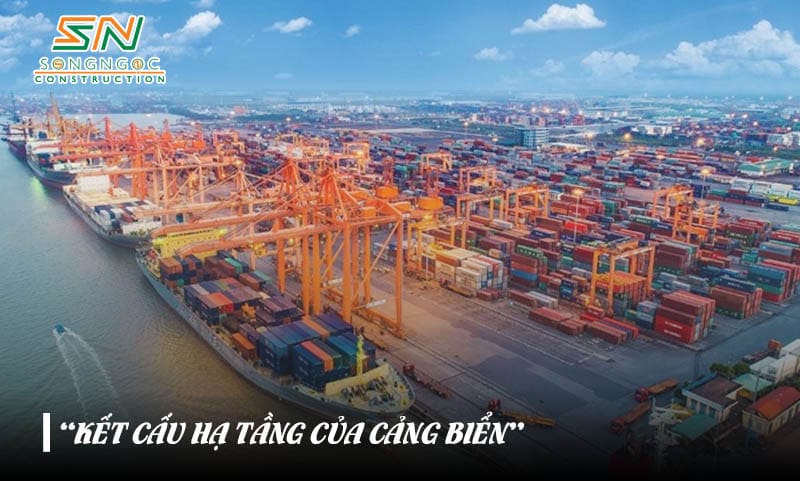
Seaports are one of the 5 types of transport infrastructure, serving as gateways for import and export goods and as hubs for transferring transport modes from sea to rail, road, and inland waterways. Therefore, the seaport system and logistics services associated with seaport operation always play a particularly important role in economic development. Today's article will introduce you to "Infrastructure and Types of Seaports Today". Let's find out more!
Seaport Infrastructure:
Seaport infrastructure includes wharves, the waters in front of the wharves, warehouses, yards, factory buildings, headquarters, service facilities, transportation, communication, electricity, water systems, and other ancillary structures built and permanently installed in the port area and the waters in front of the wharves. These concepts are defined according to “NATIONAL TECHNICAL REGULATION ON SEAPORTS”.
Seaport infrastructure construction must comply with technical regulations and requirements. This regulation specifies technical requirements and management of physical facilities and equipment of seaports. This regulation does not apply to military ports, fishing ports, and inland waterway ports located within seaport waters
- Investment and construction requirements
- Structural requirements
- Operational requirements
- Environmental protection
- Fire and explosion prevention
- Maintenance and commissioning of projects
Classification of Seaports:
Previously, the Government issued Decree No. 76/2021/ND-CP dated July 28, 2021, stipulating the criteria for classifying seaports. According to this Decree, the criteria for evaluating and classifying seaports in Vietnam include the criteria for the scope of influence of the seaport and the criteria for the scale of the seaport.
The Decree stipulates the evaluation and classification of seaports using a scoring method. The evaluation scale is 100 points. The evaluation scale is specifically determined for each criterion.
Based on the score, seaports are evaluated and classified into 4 types. These are special seaports with a total score of over 90 points; Type I seaports with a total score of over 70 points to 90 points; Type II seaports with a total score of 50 points to 70 points; and Type III seaports with a total score of under 50 points.
Seaports are classified as follows:
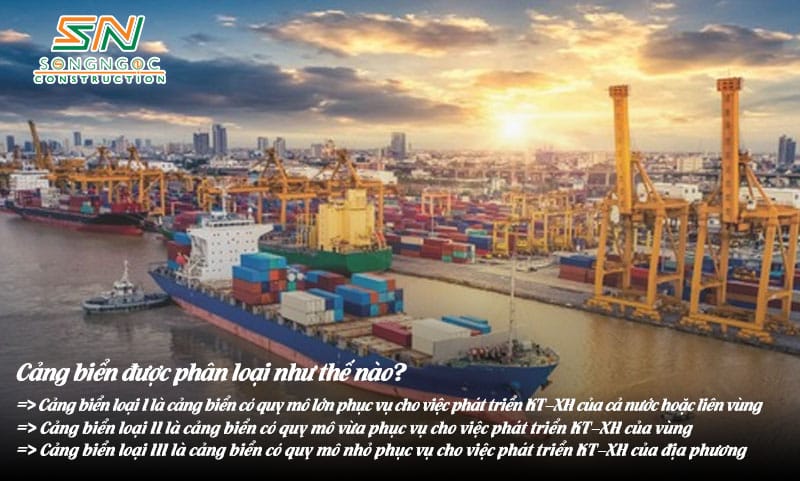
- A special seaport is a large-scale seaport serving the economic and social development of the country or region and having international transshipment or international gateway functions.
- A Type I seaport is a large-scale seaport serving the economic and social development of the country or region.
- A Type II seaport is a medium-scale seaport serving the economic and social development of the region.
- A Type III seaport is a small-scale seaport serving the economic and social development of the locality.
Deputy Prime Minister Lê Văn Thành has just signed Decision No. 804/QĐ-TTg dated July 8, 2022, announcing the list of 34 Vietnamese seaports. According to this list, of the 34 Vietnamese seaports, 2 are classified as special ports, 11 as Category I ports, 7 as Category II ports, and 14 as Category III ports.
Specifically, the types of seaports are classified as follows:
Hai Phong seaport and Ba Ria-Vung Tau seaport are the 2 special ports.
The 11 Category I ports include: Quang Ninh seaport, Thanh Hoa seaport, Nghe An seaport, Ha Tinh seaport, Da Nang seaport, Quang Ngai seaport, Binh Dinh seaport, Khanh Hoa seaport, Ho Chi Minh City seaport, Dong Nai seaport, and Can Tho seaport.
The 7 Category II ports consist of: Quang Binh seaport, Quang Tri seaport, Thua Thien-Hue seaport, Binh Thuan seaport, Dong Thap seaport, Hau Giang seaport, and Tra Vinh seaport.
The 14 Category III ports include: Nam Dinh seaport, Thai Binh seaport, Quang Nam seaport, Phu Yen seaport, Ninh Thuan seaport, Binh Duong seaport, Long An seaport, Tien Giang seaport, Ben Tre seaport, Soc Trang seaport, An Giang seaport, Vinh Long seaport, Ca Mau seaport, and Kien Giang seaport.
Criteria for classifying seaports
The criteria for evaluating and classifying seaports in Vietnam include criteria related to the scope of influence of the seaport and criteria related to the scale of the seaport.
The criteria for the scope of influence of the seaport are assessed based on the general planning for the development of the seaport system approved by the competent state authority, through the following indicators:
a) Seaports serving the economic and social development of the whole country or a region and having the function of international transshipment or international gateway port.
b) Seaports serving the economic and social development of the whole country or a region.
c) Seaports serving the economic and social development of a region.
d) Seaports serving the economic and social development of a locality.
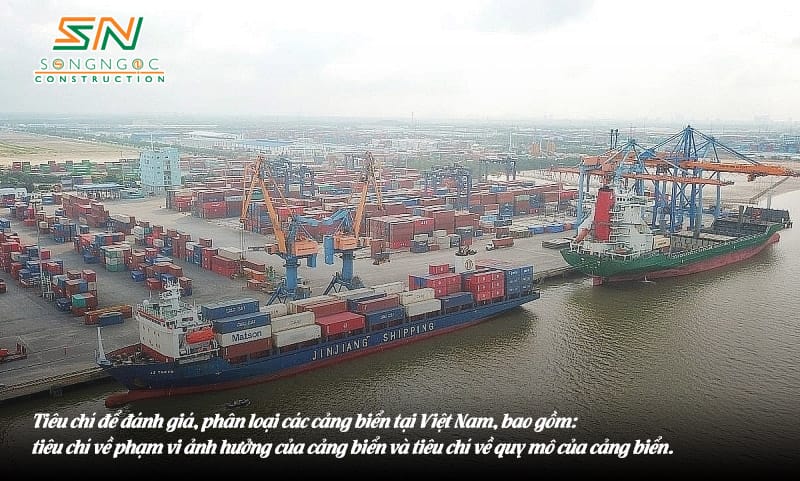
Port scale criteria are assessed based on cargo throughput and the size of vessels received at the port, through the following indicators:
a) Cargo throughput of the seaport.
b) Size of the vessel deadweight tonnage (DWT) received at the seaport.
Port Assessment and Classification Process
The Vietnam Maritime Administration periodically, every five years in January of the first year, or based on actual development at the port, prepares a list of ports, assesses and classifies them, and submits it to the Ministry of Transport.
Submitted documents include:
a) A proposal requesting port classification and publication of the port list;
b) A draft Decision to publish the port list;
c) Related documents.
The Ministry of Transport, based on the report of the Vietnam Maritime Administration, solicits opinions from Ministries, People's Committees of centrally-affiliated cities and provinces, and relevant agencies, organizes appraisal, and submits to the Prime Minister for decision on port classification and publication of the port list.
Submitted documents include:
a) A proposal to the Prime Minister for port classification and publication of the port list;
b) The appraisal report of the Ministry of Transport;
c) A draft Decision of the Prime Minister to publish the port list;
d) Related documents.
Company Information:
SONG NGỌC MECHANICAL CONSTRUCTION CO., LTD.
Address: VP-2-09, 2nd Floor, St. Moritz Building. 1014 Phạm Văn Đồng Street, Hiệp Bình Chánh Ward, Thủ Đức City, Ho Chi Minh City.
Email: songngoc.stmc@gmail.com - songngoc@sncc.vn
Phone: 086 893 7699 – 0903 968 699
Website: https://songngoc.vn/
- #song ngọc
- #tin tức
- #xây dựng