 Tiếng Việt
 English
 中文 (简体)
 日本語
 한국어
 ไทย
 Bahasa Indonesia
 Bahasa Melayu
 हिन्दी
 Español
 Français
 Deutsch
 Русский
 Português
 العربية
 Italiano
 Türkçe
 Nederlands
 Polski
 Українська
 Română
 Svenska
 Čeština
 Ελληνικά
 Magyar
 Dansk
 Suomi
 עברית
 فارسی
 اردو
 ខ្មែរ
 ລາວ
 မြန်မာ
 Filipino
CONSTRUCTION AND REPAIR METHODS FOR DETERIORATED WHARF STRUCTURES
Seaports and wharves have long played a very important role in economic and social development. This is considered a crucial gateway for import and export trade. At the same time, it is also a connection point between different modes of transport. However, over time, most seaport structures will be worn and show signs of deterioration. If this is not properly addressed, it will have enormous consequences affecting port operations, impacting businesses and causing great damage to the economy.
Understanding these requirements from investors, Song Ngọc Mechanical Construction company, with a collection of leading experts in the construction industry, will provide professional solutions for repairing wharf structures, maintenance, and reinforcing wharf structures. Ensuring the solidity, durability and integrity of your seaport wharf structures.
Why wharf repairs are necessary
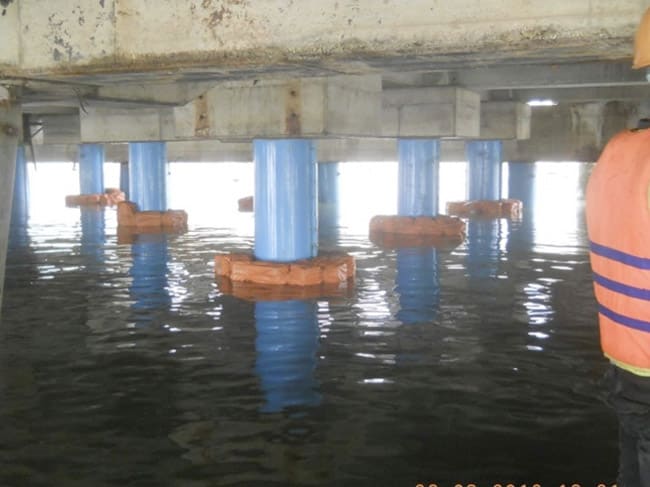
Wharves play a critical role in goods transportation. Their exposed location subjects them to harsh weather, while the substructure, beams and piles are constantly exposed to saltwater, making them vulnerable to damage and corrosion.
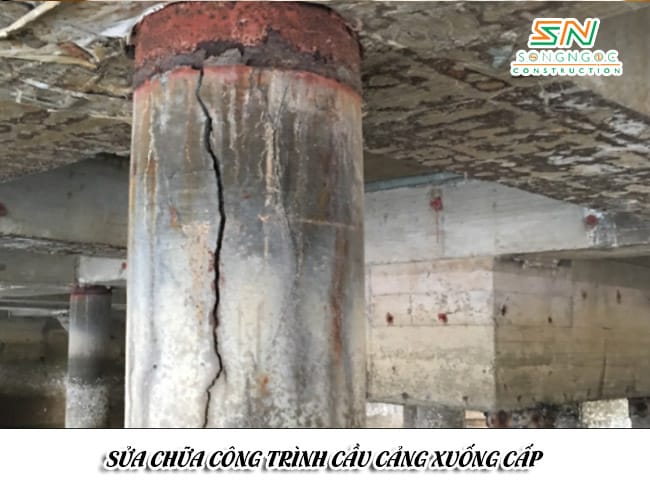
Consequently, long-term operation of a wharf can lead to significant degradation, impacting safety: surface spalling, corrosion, displacement and deflection of beams, slabs and steel piles. Therefore, timely and rapid repair, maintenance and structural reinforcement are essential.
Common Damage Types in Wharf Structures
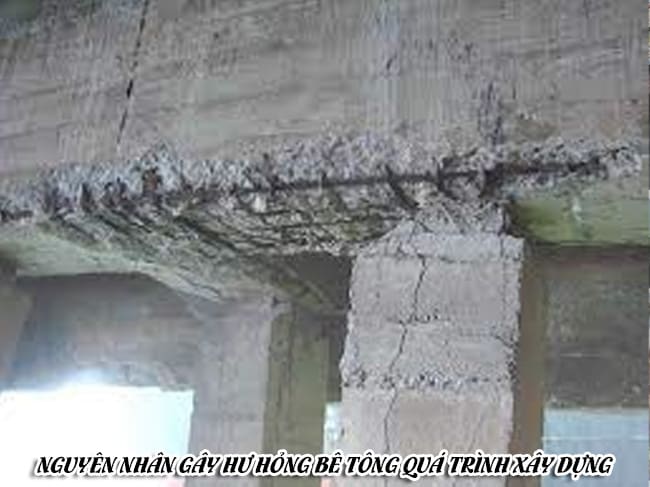
Common damage frequently encountered in reinforced concrete wharf structures:
- Cracking and concrete spalling.
- Concrete delamination and fracturing.
- Honeycomb concrete.
- Damage due to external forces.
- Damage due to environmental factors, weather and climate.
- Reinforcement damage: steel corrosion, corrosion of prestressing cables…
Wharf structures are constantly subjected to external impacts. These include natural factors such as temperature, humidity and pressure, as well as man-made factors from various activities (such as exploration drilling, nearby construction…). These impacts may not immediately affect the structure. However, over time, their cumulative effect can lead to degradation.
Structural degradation sometimes isn't immediately visible, making it difficult to detect. In other cases, degradation is clearly evident through cracking. Over time, these cracks tend to grow in length, thickness and width.
Basic Methods for Wharf Repair
These are carried out according to the following procedures:
- Ring cutting: defining the repair scope, ensuring that demolition of the damaged area does not affect the surrounding concrete, which is retained.
- Demolition: removing the entire affected area of the cracks and fractures, ensuring that all damaged concrete is removed and the reinforcement shows no signs of corrosion. The demolition scope is the largest dimension of the fracture (length and width) plus 50cm on each side, with an average demolition depth of 15cm (penetrating the inner steel layer by an average of 2cm).
- Rust removal or cutting of reinforcement: removing corroded reinforcement and replacing it with new steel of a similar diameter.
- Applying corrosion inhibitors to the steel surface.
- Applying epoxy-based bonding agents to the old concrete surface to improve adhesion with the new mortar.
Repairing cracked, fractured or deflected wharf surfaces
Wharf surfaces are typically cast with steel decking and concrete with a thickness of 20-25 cm. Transport vehicles and machinery operate on this surface.
During operation and use, bridge decks are subject to numerous external and internal impacts. This leads to changes that reduce the structure’s quality compared to the original design calculations.
Common types of damage include: Cracking, spalling of reinforced concrete, corrosion of reinforcing steel… Deck deflection affecting load-bearing capacity and the movement of vehicles and machinery….
Technological solutions for repairing wharf/jetty/berth decks:
- Using fast-setting mortar to patch the surface.
- Applying protective coatings after repair to limit environmental impacts on the deck’s service life.
- Replacing severely damaged steel components with Polymer steel (fiber-reinforced polymer).
* For the shotcrete method
+ Using high-strength, non-shrink shotcrete (grade >=400) to fill excavated concrete areas by spraying in layers.
+ Smoothing the mortar surface after spraying.
* For the pumping method
+ Erecting formwork.
+ Using high-strength, non-shrink mortar (grade >=400) to fill excavated concrete areas by pumping. The mortar is pumped through pre-placed holes in the formwork.
+ Removing metal formwork.
Protective coating for waterproofing, corrosion resistance, and erosion prevention for beams, decks, and piles of wharves/jetties/berths
This is an early preventative solution that provides good protection for wharves/jetties/berths. Applying specialized marine coatings creates an early protective layer against erosion. This is then followed by a composite coating to prevent further erosion. This prevents erosion after repair, increasing the service life of the wharf/jetty/berth structure and reducing periodic maintenance costs.
Song Ngọc Company repairs and upgrades wharf/jetty/berth structures nationwide
Song Ngọc understands the current condition of wharves/jetties/berths in Vietnam. With extensive experience in consulting, design, repair consulting, and construction of port infrastructure projects, we are ready to provide effective, professional, reputable, and high-quality wharf/jetty/berth repair and upgrade services.
With a team of experienced personnel who have participated in large projects for domestic and international investors and contractors, we are confident in ensuring your trust in our company. We have undertaken projects for investors and contractors both domestically and internationally, such as Japan (Penta Ocean, Penta Rinkai, Toa- Toyo VN. PungKook-Trung Hậu Joint Venture, Công ty Rồng Xanh, Công ty NEWTECO, Công ty MGA, Công Ty Khang Đức, Công ty Đại Dũng, Công Ty Định Tân, Công Ty Băng Dương, Công Ty Hải Đăng, Công Ty POSCO EPC VN, Công ty Fecon, Công ty IPC...)
Our company aims for sustainable, long-term partnerships with partners and customers. This benefits our partners while also creating significant value for society through the efficient use of investment capital to extend the service life of wharf/jetty/berth structures and increase their operational efficiency.
Company information
SONG NGỌC MECHANICAL CONSTRUCTION CO., LTD.
Address: VP-2-09, 2nd Floor, St. Moritz Building. 1014 Phạm Văn Đồng Street, Hiệp Bình Chánh Ward, Thủ Đức City, Ho Chi Minh City.
Email: songngoc.stmc@gmail.com - songngoc@sncc.vn
Phone: 086 893 7699 – 0903 968 699
Website: https://songngoc.com.vn
- #song ngọc
- #tin tức
- #xây dựng